
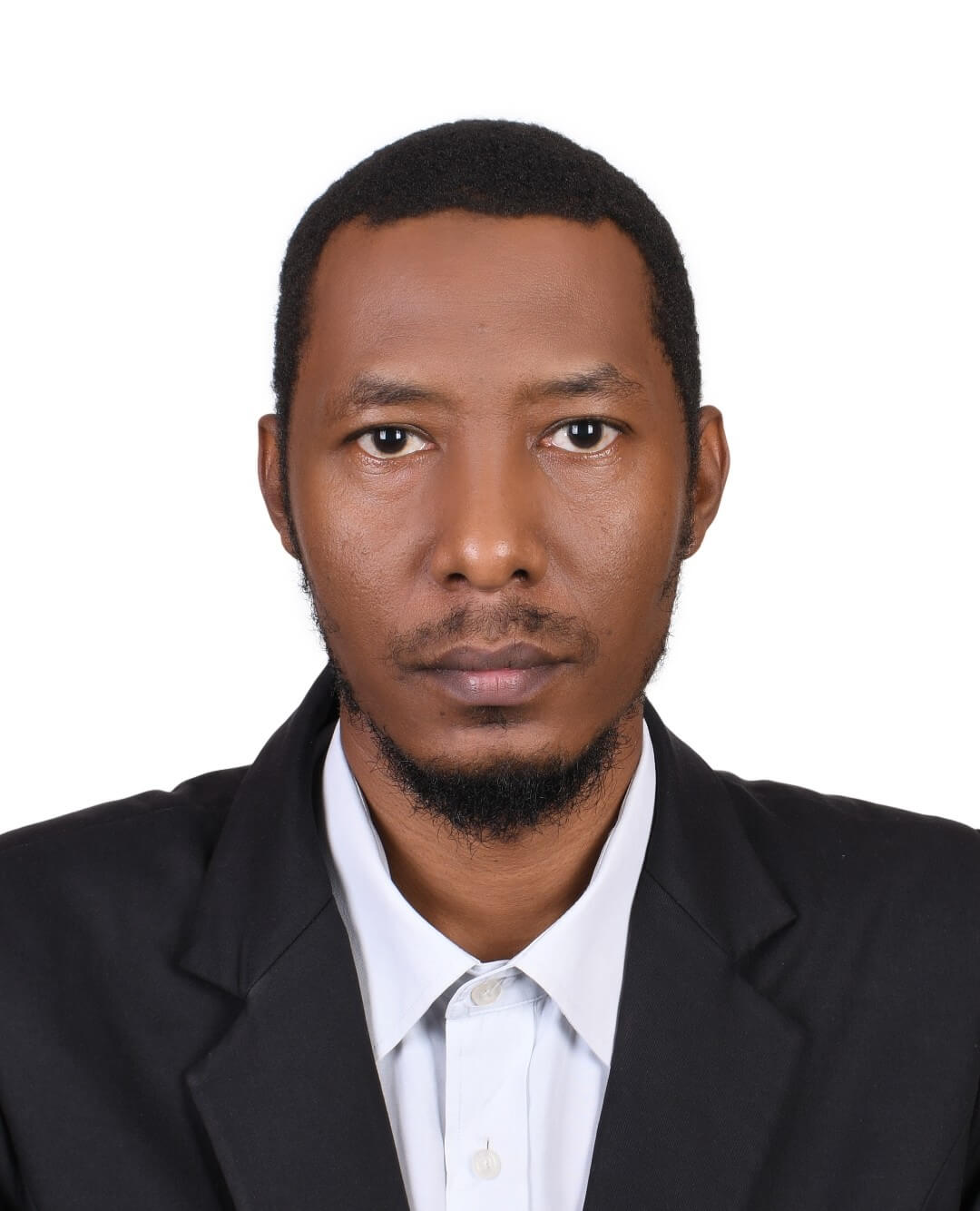
Dr. Rufai Yusuf Zakari
Senior Lecturer, School of Technology, Computing and Engineering
Dr. Rufai Yusuf Zakari is a technologist, researcher, and academic with a background in computer science, artificial intelligence, and data science, with experience in teaching, research, and interdisciplinary collaboration. Experienced in applying computational approaches to research problems, conducting independent research, and working with complex datasets. Strong interest in research innovation, academic collaboration, and developing practical solutions through advanced computing technologies.
Research Interests
Artificial Intelligence, Machine Learning, Deep Learning, Data Science, Geospatial Artificial Intelligence, Remote Sensing, Computer Vision, Digital Image Processing, Spatiotemporal Modelling, Environmental Modelling, Natural Hazard Modelling, Explainable AI, Earth Observation, Ecological Informatics.
Research Statement
My research focuses on developing data-driven computational methods to address complex real-world problems. I emphasize interdisciplinary research, methodological innovation, and the practical application of emerging technologies through collaborative research.
- Gao, K. Yang, Y. Yang, R. Y. Zakari, J. Owusu, and K. Qin, “Quatde: Dynamic quaternion embedding for knowledge graph completion. arxiv 2021”, arXiv preprint arXiv:2105.09002,
- R. Y. Zakari, K. Kalinaki, Z. K. Lawal, and N. Abdulrazak, “Advances in wildfire spread detection and prediction: Techniques, challenges, and applications”, Artificial Intelligence and Computer Vision for Ecological Informatics, pp. 9–35,
- Dewanto, R. Amelia, and R. Y. Zakari, “Pretrained deep learning models for classifying plant species: A comparative study in balikpapan botanical gardens”, Innovative Informatics and Artificial Intelligence Research, vol. 2, no. 1, pp. 17–24, 2026.
- K. Lawal, H. Yassin, R. Y. Zakari, and A. C. Idris, “Ai-driven digital twin for sustainable management of wave energy conversion systems”, in Digital Twins for Sustainable Development, Elsevier, 2026, pp. 103–128.
- S. Muhammad, R. Y. Zakari, and H. S. Bello, “A review of machine learning and deep learning approaches for crime hotspots prediction”, Application of Machine Learning in Earth Sciences: A Practical Approach, pp. 647–665, 2026.
- Shafik, A. F. Hidayatullah, K. Kalinaki, H. Gul, R. Y. Zakari, and A. Tufail, “A systematic literature review on transparency and interpretability of ai models in healthcare: Taxonomies, tools, techniques, datasets, open research challenges, and future trends”, Health and Technology, pp. 1–22, 2026.
- R. Y. Zakari, O. A. Malik, and O. Wee-Hong, “Advancing forest fire prediction: Techniques and applications for ai and machine learning”, in Application of Machine Learning in Earth Sciences: A Practical Approach, Springer, 2026, pp. 363–385.
- M. Aslam, W. Shafik, A. F. Hidayatullah, K. Kalinaki, H. Gul, R. Y. Zakari, and A. Tufail, “Intelligent transportation systems: A critical review of integration of cyber-physical systems (cps) and industry 4.0”, Digital communications and networks, 2025.
- M. Aslam, A. Tufail, R. Y. Zakari, W. Shafik, M. N. Irshad, and A. Namoun, “Sustainable and energy-efficient industrial control system: Comparative analysis of swarm and evolutionary algorithms”, in 2025 22nd International Conference on Electrical Engineering/Electronics, Computer, Telecommunications and Information Technology (ECTI-CON), IEEE, 2025, pp. 1–6.
- K. Lawal, R. Y. Zakari, N. N. Thilakarathne, H. Gul, N. Abdulrazak, and H. Yassin, “Big data analytics in bioinformatics and healthcare”, in Cyber-Physical Systems Security: A Multi-disciplinary Approach, Springer, 2025, pp. 71–95.
- D. Maiwada, R. Y. Zakari, and A. Janisar, “Distribution function-driven handover solutions for 5g mobile networks”, J. Stat. Sci. Comput. Intell, vol. 1, pp. 46–60, 2025.
- D. Maiwada, K. U. Danyaro, A. B. Sarlan, R. Y. Zakari, and A. A. Janisar, “Handover delay improvement in 5g systems using ich services”, in Encyclopedia of Information Science and Technology, Sixth Edition, IGI Global Scientific Publishing, 2025, pp. 1–23.
- Shafik, R. Y. Zakari, and K. Kalinaki, “Ethical and privacy concerns in bioinformatics and cyber-physical systems integration in healthcare”, in AI-driven personalized healthcare solutions, IGI Global Scientific Publishing, 2025, pp. 333–364.
- R. Y. Zakari, O. A. Malik, and O. Wee-Hong, “Adapting to climate change: Exploring the efficacy of transformer models in forecasting wildfires in australia”, Journal of Forestry Research, 2025, Accepted for publication.
- R. Y. Zakari and Z. K. Lawal, “Leveraging remote sensing for agriculture mapping”, Artificial Intelligence and Computer Vision for Ecological Informatics, 2025.
- R. Y. Zakari, O. A. Malik, and O. Wee-Hong, “An enhanced wildfire spread prediction using multimodal satellite imagery and deep learning models”, Remote Sensing Applications: Society and Environment, p. 101632, 2025.
- R. Y. Zakari, O. A. Malik, and O. Wee-Hong, “Machine learning-driven wildfire susceptibility mapping in new south wales, australia using remote sensing and explainable artificial intelligence”, Natural Hazards, pp. 1–27, 2025.
- R. Y. Zakari, O. A. Malik, and O. Wee-Hong, “Mapping wildfire susceptibility in the tropical region of brunei: A machine learning and explainable ai approach using google earth engine with remote sensing data”, Earth Science Informatics, vol. 18, no. 2, pp. 1–22, 2025.
- R. Y. Zakari, O. A. Malik, and O. Wee-Hong, “Spatio-temporal wildfire forecasting in australia using deep learning and explainable ai”, Modeling Earth Systems and Environment, vol. 11, no. 6, p. 425, 2025.
- R. Y. Zakari and A. S. Muhammad, “Generative adversarial networks in remote sensing and its applications: An overview and motivations”, Generative Adversarial Networks for Remote Sensing, pp. 37–62, 2025.
- R. Y. Zakari, J. W. Owusu, K. Qin, T. He, and G. Luo, “Seeing and reasoning: A simple deep learning approach to visual question answering”, Big Data Mining and Analytics, vol. 8, no. 2, p. 458, 2025.
- R. Y. Zakari, J. W. Owusu, K. Qin, H. Wang, Z. K. Lawal, and T. He, “Vqa and visual reasoning: An overview of approaches, datasets, and future direction”, Neurocomputing, p. 129345, 2025.
- R. Y. Zakari and W. Shafik, “Generative adversarial networks in time series analysis and change detections using remote sensing”, in Generative Adversarial Networks for Remote Sensing, IGI Global Scientific Publishing, 2025, pp. 257–290.
- R. Y. Zakari and W. Shafik, “Generative adversarial networks in time series analysis and change detections using remote sensing”, in Generative Adversarial Networks for Remote Sensing, IGI Global Scientific Publishing, 2025, pp. 257–290.
- M. Aslam, R. Y. Zakari, A. Tufail, S. Ali, K. Kalinaki, and W. Shafik, “Introduction to industry’s fourth revolution and its impacts on healthcare”, Digital Transformation in Healthcare 5.0: Volume 1: IoT, AI and Digital Twin, p. 33, 2024.
- F. Hidayatullah, K. Kalinaki, H. Gul, R. Y. Zakari, and W. Shafik, “Leveraging natural language processing for enhanced text analysis in business intelligence”, in Intersection of AI and Business Intelligence in Data-Driven Decision-Making, IGI Global Scientific Publishing, 2024, pp. 151–182.
- Kalinaki, A. A. Alli, B. Asuman, and R. Y. Zakari, “Secure federated learning in the internet of health things for improved patient privacy and data security”, in Federated Learning for Digital Healthcare Systems, Elsevier, 2024, pp. 387–408.
- Kalinaki, R. Y. Zakari, and W. Shafik, “Emerging trends in cybersecurity applications in healthcare systems”, 2024.
- K. Lawal, R. Y. Zakari, and H. Yassin, “Design of smart flood risk management system: A brunei darussalam vision 2035 (wawasan 2035) for climate resilience and adaptation”, 2024.
- S. Muhammad, R. Y. Zakari, D. H. Hammadu, L. Chen, and C. Wang, “Tarlen: Traffic accident risk levels nowcasting leveraging spatiotemporal deep learning on intelligent transportation data”, in 2024 1st International Conference on Innovative Engineering Sciences and Technological Research (ICIESTR), IEEE, 2024, pp. 1–6.
- S. Muhammad, R. Y. Zakari, A. B. Ari, C. Wang, and L. Chen, “Driving toward safety: A personalized approach to traffic risk assessment leveraging driver behaviour data”, in 2024 IEEE Smart World Congress (SWC), IEEE, 2024, pp. 1181–1188.
- S. Muhammad, R. Y. Zakari, A. B. Ari, C. Wang, and L. Chen, “Explainable traffic accident severity prediction with attention-enhanced bidirectional gru-lstm”, in 2024 IEEE Smart World Congress (SWC), IEEE, 2024, pp. 1083–1090.
- W. Owusu, R. Y. Zakari, K. Qin, and T. He, “Graph convolutional networks with fine-tuned word representations for visual question answering”, in 2024 IEEE Smart World Congress (SWC), IEEE, 2024, pp. 1381–1387.
- Shafik, K. Kalinaki, and R. Y. Zakari, “Blockchain’s motivation for iot-enabled smart city”, in Secure and intelligent IoT-enabled smart cities, IGI Global Scientific Publishing, 2024, pp. 195–221.
- R. Y. Zakari, K. Kalinaki, Z. K. Lawal, and N. Abdulrazak, “Federated learning for enhanced cybersecurity in modern digital healthcare systems”, in IET, 2024.
- R. Y. Zakari, Z. K. Lawal, K. Kalinaki, and U. D. Maiwada, “Time series forecasting techniques for climate trend prediction”, in Reshaping Environmental Science Through Machine Learning and IoT, IGI Global, 2024, pp. 282–310.
- R. Y. Zakari, J. W. Owusu, K. Qin, and A. M. Sagir, “A transformer-based approach for effective visual question answering”, in 2024 IEEE Smart World Congress (SWC), IEEE, 2024, pp. 1532–1539.
- R. Y. Zakari, W. Shafik, K. Kalinaki, and C. J. Iheaturu, “Internet of forestry things (ioft) technologies and applications in forest management”, in Advanced IoT technologies and applications in the industry 4.0 digital economy, CRC Press, 2024, pp. 275–295.
- Alabdulatif, N. N. Thilakarathne, Z. K. Lawal, K. E. Fahim, and R. Y. Zakari, “Internet of nano-things (iont): A comprehensive review from architecture to security and privacy challenges”, Sensors, vol. 23, no. 5, p. 2807, 2023.
- F. Hidayatullah, K. Kalinaki, M. M. Aslam, R. Y. Zakari, and W. Shafik, “Fine-tuning bert-based models for negative content identification on indonesian tweets”, in 2023 8th International Conference on Information Technology and Digital Applications (ICITDA), Ieee, 2023, pp. 1–6.
- Wang, K. Qin, R. Y. Zakari, G. Lu, and J. Yin, “Deep neural network-based relation extraction: An overview”, Neural Computing and Applications, pp. 1–21, 2022.
- Lawal, H. Yassin, and R. Y. Zakari, Flood prediction using machine learning models: A case study of kebbi state nigeria. in 2021 ieee asia-pacific conference on computer science and data engineering (csde)(pp. 1-6), 2021.
- Wang, K. Qin, G. Lu, J. Yin, R. Y. Zakari, and J. W. Owusu, “Document-level relation extraction using evidence reasoning on rst-graph”, Knowledge-Based Systems, vol. 228, p. 107274, 2021.
- R. Y. Zakari, Z. K. Lawal, and I. Abdulmumin, “A systematic literature review of hausa natural language processing”, International Journal of Computer and Information Technology (2279-0764), vol. 10, no. 4, 2021.
- K. Lawal, H. Yassin, and R. Y. Zakari, “Stock market prediction using supervised machine learning techniques: An overview”, in 2020 IEEE Asia-Pacific Conference on Computer Science and Data Engineering (CSDE), IEEE, 2020, pp. 1–6.
- R. Y. Zakari, “Identifying actual users in a web surfing session using tracing and tracking”, JINAV: Journal of Information and Visualization, 2020.
- Bala, M. Z. Shuaibu, Z. KaramiLawal, and R. Y. Zakari, “Performance analysis of apriori and fp-growth algorithms (association rule mining)”, Int. J. Computer Technology &Applications, vol. 7, no. 2, pp. 279–293, 2016.
- K. Lawal, R. Y. Zakari, M. Z. Shuaibu, and A. Bala, “A review: Issues and challenges in big data from analytic and storage perspectives”, International Journal of Engineering and Computer Science, vol. 5, no. 3, pp. 15947–15961, 2016.
- R. Y. Zakari and N. Abdulraza, “Computer security: A literature review and classification”, Int. J. Comput. Sci. Control. Eng, vol. 4, no. 2, 2016.
- R. Y. Zakari, A. Suleiman, Z. KaramiLawa, and N. Abdulrazak, “A review of sms security using hybrid cryptography and use in mobile money system”, American Journal of Computer Science and Engineering, vol. 2, no. 6, pp. 53–62, 2015.
Email: rufai@utamu.ac.ug